Sunday, March 26, 2023

Book Review: The Good it Promises, The Harm it Does


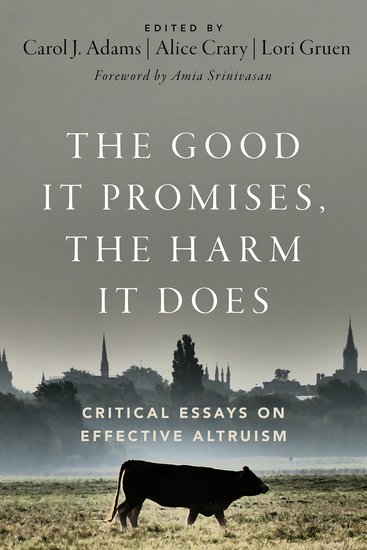
Image: the cover of the book is a landscape with a grayish sky and trees and buildings silhouetted in the background. On the bottom in the center is a cow walking through grass. Across the top the editors are listed, Carol adams, Alice creary, and Lori gruen. Below that and large white letters is the title of the book, the good it promises, the harm it does. Below that in smaller cream colored letters going through the building silhouettes is critical essays on effective altruism.

The Good it Promises, the Harm it Does might seem like a bit of a niche critique from someone who's never heard of the "effective" altruism movement. However, the type of nonsense peddled by EA is linked to greater societal norms and trends- many of which are addressed aptly in this collection. Many of us have utilitarian ethics dancing around somewhere in our belief system and many of us have also likely been harmed or have seen harm from reckless prejudice in said utilitarian outlooks.

EA proponents span a variety of movements, but most of my experience with them comes in the realm of animal rights and environmental movements. Most of the entries in this text also focus on them there. EA proponents range in level of knowledge from newer people who joined up purely because they bought the sales pitch that they will do the most good there, and big name philosophers like Peter Singer (who seems to be at a level of renown where he's unable to see outside of his own perceived genius.) I already had issues with Singer before this, but I found myself even more irritated with him after reading more examples of frankly base level ignorant judgements of his with far reaching negative effects, if only from the reach and notoriety he has.

Effective Altruists essentially claim that they're using reason and analysis to make sure that efforts and donations are funneled into organizations doing the most amount of good. Many people may already have alarm bells going off when they read that, but if you don't, that's ok, keep reading. TGIPTHID is a collection that tackles the issues with their approach from a variety of angles. One of the books biggest strengths is the varying backgrounds that the authors come from ranging from community organizers in densely populated cities to rural farm sanctuary workers and jargony academics. Each entry offers a variety of critiques and as a whole, I struggle to think of how anyone actually absorbing the info could defend EA after reading it.

As one entry mentions, the compartmentalization and numbers game are flawed from the start. Should we stop helping endangered species since there are so few of them left in comparison to larger populations of farmed animals? Do individuals ever matter? What about when that individual touches millions of lives and changes them forever? Others mention the racial make up of EA being almost entirely white, leading to a list of recommendations that reflect what the members see as most effective (which is amplified by their complete lack of understanding of data analysis.) There is an effect of how EA functions similarly to how billionaires choosing what research is important does- they choose what they like, and think is important, causing more marginalized yet important efforts to be buried and exponentially increasing the support for ineffective and/or already dominant efforts. There is also a very patriarchal element in assuming that one can actually do anything based on 100% "reason" devoid of emotion- allowing men's emotional decisions more space since they're automatically seen as more reason oriented and grounded in reality despite evidence to the contrary. One of the most frustrating things about EA that I have known about the longest is their offensively bad understanding of statistics and research. Even if one could argue that their methods and philosophy were defensible (they aren't,) they aren't even calculating things in a way that gives an accurate picture of the numbers. 

All of these problems and more result in EA making recommendations for funding and effort that cause already underfunded movements to get even less funding and the most popular, wealthy, well known movements to get even more. When you're doing shoddy statistical analysis and only looking at variables without proper understanding of various effects, of course the organization with a budget of millions of dollars is "more effective" than the small community organization in a poor area. Even experts in statistics debate about how to best analyze and understand data. EA runs through it all like doing 2nd grade math offers the pure truth.

The entries of this book truly help draw attention to just how dangerous EA is. I do not blame those who are new to it and don't know better. But, the men like Singer white knuckling their way through and sniping at various efforts to try to lend more legitimacy to their self centered view of things us indefensible. Furthermore, what makes Singer so important? Since medical care for individual rescued animals - even when it results in improved medical treatment for others across the board- is a waste of money, wouldn't Singer save more lives if he died and donated each of his organs to someone in need? He could donate all of his income after death to organizations. Actually, wouldn't we be more effective if the Global North all died since we consume the most resources? Singer already argues that disabled people have less worth, will he be ending things when he, like anyone who ages and stays alive, becomes disabled? 

This "rational" way of looking at these calculations in the most shallow levels is a ridiculous way to assess effectiveness. It not only can be used to go the route of fascism like my last example, but it forces people into seeing a tiny sliver of the big picture- similar to assuming that removing a human heart and tossing it onto a table gives one a picture of the function of the entire body's systems working together.

All in all, reading this book would benefit just about anyone. These ideas are all around us all the time. Unfortunately, there is no perfectly effective way to funnel money into a single org that can rid us of the stain these issues leave upon us.

This was also posted to my goodreads.

Sunday, March 5, 2023

Book Review: Imperfect Victims

Image: The cover of the book is a white background with thick black strokes painted messily across the top and center. In hot pink letters is "Imperfect victims: criminalized survivors and the promise of abolition feminism." Across the bottom is the author's name: Leigh Goodmark.
 

Imperfect Victims: Criminalized Survivors and the Promise of Abolition Feminism was honestly an absolutely brutal read. I am very selective about the kinds of heavy trauma and triggering content I expose myself to these days. I don't run from it all, but I don't drown myself in it to the point of exhaustion like I used to (and used to believe I had to.) The reason this book made the cut is that I believe it adds something important to the general discourse around abuse, sexual violence, punishment, and imprisonment outside of the current way these things are often framed.

The book began as Leigh Goodmark's attempted project at working with incarcerated victims to create a book together about their stories. Maryland's Correctional Department squashed the idea and the participants agreed that Goodmark should tell their stories for them. Much of the book is just that- telling the stories of criminalized survivors of violence who either retaliated violently against abusers or were forced to break the law by them. This is what made the book so difficult. You can't really have this discussion without talking about what happened to these women. I actually would have loved to see the book written by them in a more memoir format. But, I also wonder how much the scholarly nature of this book allowed me enough detachment to make it through. 

The reason I say that this adds something important is that I have been around a lot of various processes, legal and not, regarding abuse and sexual violence. There is an urge on the part of those helping survivors to paint them as angels and those who abused them as the opposite, both of them existing in some one dimensional war with one another. This is well intentioned, but fails immediately when the survivor does something human- making a mistake, showing a flaw, or even just doing something strange or non-normative. Goodmark discusses the ways that survivors can both be victims of violence and also have flaws and take actions that may or may not be defensible morally or legally. I am not saying that this has never been done- people have discussed this for as long as I can remember. But, in more mainstream systemic settings like law and academia, many people need this. 

The parts of the book that were slightly easier to make it through was Goodmark's detailing and analysis of prison and criminal (in)justice systems. Again, it is not that no one has ever discussed this, but the combination of topics mixed with these womens own words is an important collection of ideas that makes them more salient and urgent. Goodmark shows just how much the system is stacked against survivors, punishing them for the abuse they suffered, often after the same system ignored their pleas for help. It punishes the victims of trafficking and it punishes women who act in self defense. Issues of race, gender, and sexuality also play very large roles in who is believed and how women are characterized. 

Goodmark makes a strong effort to include information about transgender people in these systems. It was refreshing to see this kind of inclusion in a legal text because these experiences are so often forgotten. I did find her overall analysis of non-cis/het relationships to be lacking. There is one very brief mention of a lesbian woman's horrific experience through abuse by her partner and then the system's criminalization of her. But, I would have liked to see more discussion about same gender (or perceived as such) relationships and how the system will often treat these instances of violence in differently screwed up ways. It also is important in general for those of us in these communities to remember our communities' own capacities for violence- that it is not limited to straight people or hetero partnerships.

The last section of the book offers important criticisms of prison-centered, reformist, non-solutions to these problems, showing how they strengthen rather than disrupt the system. There is also a small discussion of solutions that are based in abolition. This is a good section, but it likely could have been longer. However, thinking of the author's description of the idea for the book, it makes sense that it's more focused on sharing experiences rather than a handbook of solutions (despite the byline which the author may not have chosen.)

There were a couple of things that I would have liked more of her thoughts on. I agree with pretty much everything she discusses. I agree that abuse and violence create situations where victims have to take criminalized action. However, the argument that abuse is a reasoning for an action seems like it could backfire (and already does.) We regularly see abusers turn around and accuse victims and in lgbtq circles or in unexpected power dynamic relationships (a woman abusing a man, a disabled person abusing an abled person, etc,) this can really make those outside the situation struggle to understand it. It also could be said that some abusers abuse because they were also abused. In cis/het partnerships, there is an obvious power dynamic and the abuse often goes in one direction, but not always. In many LGBTQ relationships, gender roles are more complicated. I am not entirely sure what my exact question is. Having seen radical accountability efforts range in everything from very clear cut to extremely confusing, I am curious about where one draws the line in these arguments. I am also curious if Goodmark has opinions on how to stop the abusers. Goodmark obviously is pro-abolition, so what does the other side of the solution look like with violent men (and others?) And, how do we wade through muddier waters where accusations are flying in multiple directions? Again, this is not the thesis of the book, just things I thought of regularly that I would like to pick her brain about.

Overall, Imperfect Victims should be read with care, but also should be given your attention if you're up for it. This is especially true for people who have not survived abuse and/or the prison system and for those who have any role in the legal process. The information in this book is hidden from most people in the USA who get their information from legal and crime dramas or terrible local news segments. I am grateful for all of the women who shared the stories included in this book and I hope that all of them who are still surviving get to live the rest of their lives with as little suffering as can be possible in this awful punitive system.

This was also posted to my goodreads.

Saturday, February 11, 2023

Book Review: It Came from the Closet


Image: the fantastic cover of this book is a illustration of a gravestone with a rainbow behind it and a black sky. In front of the gravestone is a limp wristed pink hand reaching out of the ground. On the gravestone it says it came from the closet in large black letters and queer reflections on horror in smaller letters. Across the bottom and small pink letters it says edited by Joe vallese.

I didn't know exactly what to expect from It Came from the Closet. I often start books that include any sort of academic media review assuming that I may put them down due to boredom. Sometimes media analysis, especially if I haven't seen or read the media, is so incredibly dull to me and just not my thing. This collection is very different than those sorts of texts. There are a couple essays in it that push past the line of pretentious academia enough to be mildly annoying. But, most of these stories couch their analysis in fantastic storytelling of personal experiences of the authors. 

There is a wide diversity of contributors to this book from varying gender and sexuality labels and upbringings. They are well written and the storytelling aspect of it makes this sort of analysis so much more accessible and entertaining to read.

I was basically raised on horror movies and books. It was one of the few things that I connected with my dad on when I got to see him. I recall having a variety of reactions to them from fear to outright laughter. When Army of Darkness came out, having seen the first two Evil Dead movies, we went in ready to laugh and had the whole theater chuckling with us by the end. I also recall The People Under the Stairs with its racist and misogynistic story lines involving child abuse terrifying my 9 year old self to a level that I wouldn't open my eyes until the lights were back on. I saw things that were just fine and others that I believe I was too young for.

I hadn't really thought much about how my queer and transness related to these sorts of media until reading this text. It makes a lot of sense. A lot of the entries sort of grappled with the way monstrosity and terror are used in media and how they can relate to being seen that way themselves. Others discuss how horror allowed them to escape from the real horrors of life, something I can definitely relate to. There's something comforting about watching something that's not real and knowing that it's not. Even in my nightmares, the ones that involve things like zombies and vampires are not nearly as scary as the ones involving social ostracism and abuse. Some discuss how certain tropes and characters were purposely or accidentally coded as queer and many other sorts of analysis.

All in all I think this book really bridges a gap between a queer memoir storytelling and academic media analysis making the topics accessible to a wider audience. But, all of that aside, I truly just enjoyed this book and the voices within. It was a fun read, whatever it is.

This was also posted to my Goodreads.

Thursday, February 2, 2023

Book Review: “You Just Need to Lose Weight”AND 19 OTHER MYTHS ABOUT FAT PEOPLE


Image: the cover of the book is a magenta background with white lettering that is block style with orangeish yellow edges. And large letters it says "you just need to lose weight," and smaller letters it says and 19 other myths about fat people. And small white letters across the bottom it says Aubrey Gordon. Below that and yellow letters it says co-host of maintenance phase.

It's probably best to approach Aubrey Gordon's book, “You Just Need to Lose Weight” and 19 other myths about fat people as a collection of essays or a long form list post. I think this is a good thing for this kind of book. Since there are some myths that some people may already know about and because many readers will likely be fat acceptance activists, this format allows one to skip around. It also means that reading it cover to cover has some repetition of certain citations and points, but I didn't find it to be annoyingly so because the book is not overbearingly long or anything.

A word of caution for fat folks, especially those who experience the highest levels of discrimination, this may be a tough read or unnecessary read for you. As each topic goes on, Gordon starts with some very basic myths and gets into the more niche myths as the book progresses. You may not find much more than a rehashing of your own trauma in the first few, but may see some interesting points in the last few where she talks about things we find specifically in fat acceptance movements.

I'm not 100% clear on terms, but I believe I have experienced much of my life in the straight size to small fat categories. Most of my life I've been in "overweight" or "obese" BMI categories off and on. However even when I was in the "normal" range, I still ran into discrimination from medical providers, including one telling me that an allergic reaction I was having to a medication was due to me having a "high BMI" that made my tongue fat. Yes, really. I also know what it's like being afraid of not being able to get gender affirming care due to random BMI limits that can change office to office. 

Given the amount of medical discrimination I have faced and how harrowing that can be, the compounding of it for very fat folks- especially who have other intersecting oppressions to deal with- is almost unbearable to try to imagine. The urgency of this issue is grand, and yet the social support isn't there. As Gordon covers well in one myth near the end, anti-fat bias is not the "last acceptable form of discrimination" by any means. But, it is something that has unique kinds of hatred thrown at it like any other oppression does and is also compounded by those other oppressions. This book is great for folks who may not fully understand the basics (as well as some next tier info as well.)

I listened to the audiobook read by Gordon and really enjoyed it. Her voice is that of a passionate but familiar (imaginary) friend from her podcasts. I also just wanted to give her a hug afterwards. Putting together an accessible listicle style book with your own trauma and keeping it readable and not overwhelming is no easy task. This book brings up many emotions but isn't trauma porn. 

I definitely recommend this (as well as maintenance phase podcast) to anyone needing to learn more. I recommend at least the last third to folks who already know a bit.

This was also posted to my goodreads.


Tuesday, January 3, 2023

Book Review: Street Rebellio


Image: the cover of the book is a orange background that is a tinted version of a black and white photo of protesters in the street. There is smoke in the air and several figures in various positions our advancing toward a chaotic area of the street. In the center is a white square. And white letters at the top of the square is the author's name Benjamin s case. Below that street rebellion and larger White letters. Below that and smaller white letters is resistance beyond violence and nonviolence.

I did not realize going into Ben Case's Street Rebellion: Resistance Beyond Violence and Nonviolence that I only had one degree of separation from the author. I'm so out of touch with local Pittsburgh organizing these days that I did not know the author personally, but I'm proud that they're from here. This book was one of the more exciting and motivating reads on the topic of movements and tactics. I had all kinds of nostalgia during the experience that made me both miss and NOT miss my rowdy days.

Case tackles many of the sources held up as "evidence" of the success of "purely non-violent" activism in detail. This book does something different than some others in this vein though. Rather than arguing that another form of action is the TRUE way or path to success, he argues that everything from pacifist action to riot is an inevitable consequence of oppression and the fights that exist to combat it. Rather than simply staying "Riots work," Case takes a more nuanced and realistic approach seeking to better understand and inform discussions about movement structure and results.

I honestly never knew the roots of many peoples idea that "non-violent" organizing is the most successful. I keep putting "nonviolence" in quotes because Case makes it clear throughout the book that this is a very poorly defined category, especially by self-professed non-violent organizers and trainers. It turns out many of the sources that people claim are comparing violence and nonviolence are actually comparing revolutionary war efforts including massive human casualty and all other movements. It's more complicated than that but for the sake of a shorter review that's what I'll say. Through the telephone game of life, this data was warped to serve an agenda that states that the only really successful way to challenge oppression is with forms of protest that do not involve any sort of self-defense, property destruction, forms of rioting, and so on. What is possibly the only part of the book that isn't super exciting is a chapter where case does a small analysis of the data around various movement tactics. It's pretty much written like a scholarly article and anyone without a research background is going to struggle with it. But it's necessary because it does something that these other groups claim to have done and shows that there is little basis for what they are saying. Pairing this with his overall analysis was a smart move in my opinion even if it goes over some people's heads because it will prevent detractors from claiming that they have done research and that Case has not.

Pretty much anyone in any form of organizing has met self-professed non-violent activists and/or the peace police. It is widely accepted in many circles that nonviolence, whatever that means, is the most effective means of seeking change. Anyone that diverges from this can be accused of everything from being a fed, being an in outside agitator, co-opting the movement just to have fun breaking things, or just being ignorant of the true nature of justice. Ben Case shows in a myriad of ways that this is not only untrue, but it feeds into the narrative of the state and other authoritarian structures that seek to profit/gain authority from appearing to be allied with resistance to oppression while also being agents of that oppression in very direct ways.

It seems fitting that a Pittsburgher wrote this. I think of very specific examples such as a brief argument I witnessed during the G20 as a black bloc rolled a dumpster into the street. Two women dressed and what looked like a Halloween costume of 60s hippies with flowers painted in their faces started screaming at the A-team, "Non-violent! Nonviolent!" One of the anarchists turned to them and yelled back, "Property destruction isn't violence!" It's an interesting exchange that this book made me think about because it shows a glimpse into how ill fitting this sort of exchange was for a moment when heavily armored police and deputized reactionaries were shooting weapons into the crowd. What those women likely didn't know was that many tactical discussions were had about what kind of things would work in different scenarios. As a result a ton of different kinds of actions from many different groups were planned during the G20. I recall the Pittsburgh principles where many active groups basically agreed not to talk shit on each other's tactics during the movements of that time.  

Case also mentioned how former mayor Peduto used the 'outside agitator' myth to make himself appear as if he was allied with anti-racist movements during George Floyd uprisings while simultaneously labeling any action he didn't like as that of a lone invader. He also attempted to lie about police brutality and weaponry to the faces of the victims of it as well as the media. The book doesn't mention (because it's not just about Pittsburgh) that Peduto has a pre-Mayoral history of coming after anarchists, often as a whole, anytime any action was taken that he didn't like. Peduto encourages a parade he can join, not an action that challenges his position or that of his police (who are notoriously corrupt- even for cops- in Pittsburgh, but that's a whole other rant.)

Case also includes interesting conversations that he had with various activists and organized from various generations about their experiences being part of riots. I found this interesting because I see it so little in books about tactics. In these conversations, they talked about how and why people were involved in these things and what function they played. Rather than going through a step-by-step guide of why XYZ tactic is going to work in XYZ situation, there is a much more human aspect to these conversations. And in the end, spontaneous action and even highly pre-organized action is all very very human.

Most of the book takes a confident but gentle approach, walking The reader through each step of cases analysis. When we get to the last section, we really get to feel that passion that the author has for the subject. I think it was smart to leave this to the end carrying the reader along so that they can truly grasp why that passion exists. So, next time you run into somebody who is a non-violent activism trainer or who is telling you that they know for sure that one tactic or a few are the only ones that ever work, hand them this book. I hope more people reading this will lead to better conversations across movement lines about what tactics can work in various situations rather than some sort of argument about what tactics can work at all. I also hope that this book reaches greater audiences to help dispel the extremely successful liberal propaganda about good and bad protesters detailed well in the book.

This was also posted to my goodreads.

Tuesday, December 6, 2022

Book Review: Try Anarchism for Life


Image: the cover of the book is a green background with a hot pink circle a in the center. Inside the symbol or green illustrations of leaves winding through the lines. On top of the symbol and lighter green cursive lettering is try anarchism for life. Around the top edge of the symbol and small black letters is Cindy Barukh Milstein. Along the bottom edge of the circle is the beauty of our circle.

Try Anarchism for Life is a break from Cindy Barukh Milstein's usual style, (which I like very much for the record.) It is more abstract in some ways, more playful, and more accessible, (though I do find their other books quite accessible as well.)

The book, published by Strangers in a Tangled Wilderness, is a lovely printed collection of artworks sent to the author paired with Milstein's short writings on various topics. There are lino and wood cut prints, illustrations, graphic design, and more. I really loved the images that they chose to include in this book and Strangers did a great job with the design and printing.

When I say this book is accessible, what I mean is that I think it could be handed to almost anyone, including youth within reason as well as older folks. It has a playful and simplistic way of talking about who anarchists really are and creating a much larger picture than the black bloc that some people may see on the news (which Milstein and I both also support for the record.) Many people do not connect the mutual aid efforts that they run into with anarchism due in part because in those situations, anarchists don't often call them anarchist events- they're more focused on getting the work done than branding. People often associate anarchists with what they're against. Given that the vast majority of anarchism is based on cooperation and taking care of one another, this sort of quick run through of various elements is very important.

There is the curmudgeon and me, who no longer organizes due mostly to health problems, but also for other reasons. I've seen some stuff go down that I and other anarchists should not be proud of. This part of me feels the need to remind the curious reader that anarchists, like all human beings, can have some really messy group dynamics and anti-aurhoritarian groups can attract people looking to exploit that. This book doesn't talk about that, nor am I saying it should. I'm saying that this book creates a beautiful picture of anarchy and I wish I could say that we could match that perfectly in real life all of the time. 

That said, one of the best messages of the book is that one can do anarchism day to day alone or with some friends in a variety of ways, regardless of if one joins an anarchist labeled group. Anarchistic things are happening all around us and many people don't even realize it. When a conflict arises or when something doesn't work, we can change and grow in new ways. Anarchism can only stay alive with said growth.

This book does an excellent job of showing that anarchism is not what reactionaries believe- either a structureless society full of harm, an authoritarian communist dictatorship (addressed directly in the book, by the way,) or a chaotic street party based purely on destruction. It is a consistent movement on a long journey with no end. It is a constant struggle to create better things in the place of the harmful structures that exist to take it all away. 

I believe that Milstein conveys these and more things in a way that is light and playful. The reader does not have to prepare themselves for a 800 page book full of dead anarchist theory one needs a background in or college degree to grasp. They can read this and know what anarchism actually looks like on a day to day basis, and get to enjoy some excellent artwork in the process.

This was also posted to my Goodreads.

Book Review: Summertime - reflections on a vanishing future


Image: the cover of the book shows an expansive charred landscape from the perspective of a kookaburra who perches on a damaged tree on the right side of the cover. The skies are orange red from fires. Across the top is the author's name in white letters. Below that is summertime and black letters. Below that is a black line and under that in smaller black letters is reflections on a vanishing future.

I have to be careful with what I read and watch these days. For a variety of reasons, including clinical ones, I simply do not read or watch graphic descriptions of trauma for the most part. There are exceptions where I will because it is wholly necessary for a specific situation, but long gone are the days where I will watch undercover videos from animal farms as they reach the media. As a result, I was a little worried about going into Summertime: Reflections on a Vanishing Future. The last time I read about wildfires and how they affected humans and other animals in the area, it was a story of people abandoning farmed animals in enclosures to burn to death. Their experiences (and the coverage ignoring why they were trapped and what their fate would have been otherwise) dominated my obsessive thoughts to the extent that I could barely function. 

I did not have that experience this time. I was truly impressed by Danielle Celemajer's ability to navigate the most horrific of topics in a way that both allows the reader to attend to their seriousness and sadness while also not beating them over the head with some sort of trauma porn. She allowed the reader to see the bigger picture of her life with her family and friends- including Jimmy and Katie.

At one point in the book, the author discusses how impossible it would be for a human being to attend to the life of every animal lost in Australia's wildfires. It would involve multiple lifetimes of doing nothing but thinking about the suffering of animals at all times. The truly unimaginable number can cause us to detach from things. That is part the importance of books like this that allow us to understand the lives of individuals. The author does not allow the reader to run from the situation or to intellectualize the problem. She holds your hand and walks you through it with her in such a way that you do not need to think about what you believe. Reading this book embedded this experience within me and gave me what I assume is the best understanding someone could achieve who wasn't there.

I'm intentionally being somewhat vague in describing the specific characters of this story because the author does this as well in the beginning. 

I am frustrated that this book is not being marketed in the USA. I originally thought that people in the USA would not be able to read it, but I just checked and there are some websites selling the ebook internationally I believe. I think this book is of critical importance for us to understand what is happening to this planet and how it affects not just humans but everyone else we share it with. With wildfires raging all over the globe, many of us do not really understand what a wildfire is like. I for instance, did not know that they can envelop a home in moments, traveling so quickly that by the time you see them on the horizon you may be doomed. As this planet burns, as ice caps melt, as indigenous peoples island homelands sink, as countless species disappear forever, and countless more die in nets and in slaughterhouses, it can be difficult even for those intimately connected not to detached from it all. Celemajer manages to tell such difficult stories in ways that allow us to absorb them without denial and without shutting down.

 I am a different person after reading this book. I can only hope that others will have similar experiences, if not from this book, from the stories of others. I hope others will be able to understand the lives of the humans and other animals and this story and apply that understanding to the trillions who lose their lives every year so that we may understand what we're responsible for and what needs to change. It's so much bigger than most conversations being had. I leave this review knowing it's insufficient for this topic.

This was also posted to my Goodreads.

Book Review: Readme.txt

Image: the cover of the book is a purplish tinted mix of grays and blacks making up a form of digital camo. Across the top and large white letters is Chelsea Manning across the bottom is the title of the book. In the center is a small icon of a document file and underneath in small white letters says a memoir.

Readme.txt gave me a new understanding of Chelsea Manning's life. I knew of her story, I had followed things in the news, I paid attention to her twitter, and I got to see some of her finally being able to exist as her true self. However, like most things that make their way into the public eye, and like all things that don't, they can become hidden over time under the barrage of information pummeled at us on a daily basis.

It's easy to lose track of time and tragedy in this kind of environment. It's difficult to imagine the individual moments of someone locked away and tortured, especially the further away one gets from the event being reported upon. This is the sort of fate that affects all prisoners. Even those who have the love and dedication of family and friends are often left separated from any sort of connection. The system is designed this way. In the case of someone like Chelsea Manning, add on top of that the horrors of secret prisons, being a trans person in prison, being accused of treason, spying, and other ridiculous crimes, being kept in solidarity confinement even worse than that of other prisons, and being thrust into the public eye while the government controls the narrative as much as possible, and you have a recipe for an even more extreme forms of torture.

It was interesting to read about Chelsea's journey from being a nerd who was good at computers to being a whistleblower. Her naive innocence, especially when she described how she never thought that she would get the punishments she did for releasing such important information, is an important part of this story. She wasn't some sort of anarchist weaving her way inside the military to sneak out bits of information for exposure. She was someone who saw more and more horrific things that didn't match with the message that she was given about the heroics of the US military.

The book is also an in depth look at what it was like for many LGBTQ people during don't ask don't tell. In Chelsea's case, it opened the door for more abuses, including from superior officers, that couldn't be reported without outing oneself. For all of the criticisms of the military, it shows that any law in any area that marginalizes lbgtq people is going to do harm far and wide.

I also found how Chelsea talked about being trans in the prison system to be refreshing in our current climate. Anti-trans people often accuse us of playing dress up or saying that gender roles and clothing are what make us trans. Chelsea's fight against the prison system to get hormones and proper transgender care rather than a small concession of slightly longer hair or something is an important one. Yes, it is true that there are many people who identify as trans for a variety of reasons and express themselves in different ways. But, for those of us who need to transition medically, legally, etc, being trans isn't simply being allowed to wear a different cut of clothing. At the same time, in an oppressive authoritarian system, those little concessions also matter a great deal. Wrap all of that up with the dangers that trans people can face in prisons and you get a complicated story which I think Manning navigated in this book well.

Overall, this book was an interesting glimpse into more of Chelsea's life that made me even more glad that she's finally out.

This was also posted to my Goodreads.

Sunday, November 13, 2022

Book Review: NAS Birds of North America


Image: The cover of the book is a white background with the left side covered by an image of a bohemian waxwing- a light tan bird with a black mask and throat. The right side says BIRDS in large red letters and national audubon society and of america in smaller red letters. The description of the text in the lower right in red letters states: The complete guide to birding- with full-color photographs, updated range maps, and authoritative notes on voice, behavior, nesting, and conservation status. The lower far right corner has the black audubon logo.1

I am not sure where I stand on the birder experience list. I think of myself somewhat close to a beginner because I have been an avid birder years, contributing to citizen science like ebird.org, but I only recently started taking classes and consulting more than apps. Audubon's app, in my opinion, is best for visual ID and Cornell's Merlin for sound and photo ID. I am at the stage where I have learned enough that I realize how little I know. That said, I do think I have gained enough experience to be able to review new guides when they come out. The National Audubon* Society's new edition of Birds of North America has been updated for the first time in decades, which is an important step given the massive negative effects and changes caused by human intervention and climate destruction. 

The start of the book includes a short and helpful overview of bird biology topics written by experts in the various fields. There is some ranking of "intelligence" and other anthropocentric metrics, but they also do well to highlight birds' own interesting characteristics and abilities separate from humans.

This volume does the same thing that all of my other bird guides do- they refer to birds as "it" throughout the book when it is entirely unnecessary. I was also not a huge fan of how they discussed non-native species. While they do initially account for humans being at fault, they tend to describe birds like starlings almost entirely by the damage they do to industry (with no acknowledgement of how many of those industries are a far greater threat to birds than any non-native species.) They also do not acknowledge that many non-native species populations are in decline along with native birds and the perceived damage done by species is not shown in studies to be nearly as bad as the mythology around them- which is used as an excuse to offer them no protection. Though, I admit I did not read every bird description in the book.

The guide, like all others I have encountered, focuses visually on adult male animals (with the exception of rare more colorful females such as the belted kingfisher.) I am not 100% against this- it can work in one's favor for certain kinds of IDs. Many breeding plumage males (like many warblers) will show the most extreme versions of the field markings that can then be sought out in their lighter expressions in nonbreeding plumage males, females, and  juveniles (if there's a difference in said species.) But, the focus on the flashy male species not only ignores the wonders of female camouflage (again, if the species has it,) it also causes birders and others to have an extremely difficult time identifying sexually dimorphic females of unfamiliar birds. Given how massive this volume is (textbook sized, even larger than my Sibley volume and far larger than my other 3 guides,) it would have been nice to see more images of juveniles, females, nests, eggs, etc. The images could also have been labeled better and seem to be the same ones from their app (which are labeled in the software.)

One major improvement is the updates to conservation statuses and some of the texts. The first thing I did was flip to the section on wild turkeys to see if the same horrid description from the app- calling domestic turkeys "rather stupid creature(s)" was present in the text. It was not. (Though it is still in the app unfortunately despite my and others complaints.) The conservation information and discussion of population changes are critical given that since the original publication, bird species have declined and changed in major ways. The volume is also well organized by types of birds and including cover flaps and a ribbon to hold one's place. There is also an index to find each bird without needing to scan an entire family section. 

The photos are gorgeous and seeing them on the larger printed page vs the app or website is nice. I won the softcover version from a goodreads giveaway, so I cannot comment on the hardcover design. Overall, it's a beautiful and valuable guide I am happy to add to my collection.

*NAS has acknowledged that Audubon was a slaver and colonialist who shot and posed the dead bodies of all of the birds in his famous illustrations. This is a good first step, but I and others think they still should change the name, especially since there are a great many genius workers in the NAS that descend from Audubon's victims.

This was also posted to my goodreads.

Book Review: Creative Interventions Workbook

Image: the cover of the book is a light teal background with a black and white linocut print of a fern unfurling in the center. Across the top in large white letters is "creative interventions workbook." Below that in small letters is "practical tools to stop interpersonal violence." On the bottom there are four circles with symbols in them- a bee, a conch shell, a gear with a wrench, and an ocean wave.

Creative Interventions has been a valuable resource for quite some time, but the print publication of their Toolkit and now Workbook by AK Press has given them much needed further reach. I read and reviewed the toolkit in the past out and found it to be incredibly helpful and informative instruction on dealing with abuse, violence, and other harms perpetuated in a variety of communities without relying on authoritarian state systems that often do not help and can make the problems worse. The toolkit is also a textbook sized, repetitive, massive volume that many people may not have the time, energy, or persistence to get through. I tried to read it cover to cover, but admittedly ended up skimming much of it halfway through due to the size and repetition. The repetition is not a bad thing- it allows the book to be broken up, copied into sections, and shared without constantly reading through the whole thing. But, a more condensed overall review of the processes was much needed (and requested of the organizers.)

Enter the Creative Interventions Workbook: a small volume that is far more accessible and less intimidating. This will allow more people to access and use the information. CI makes it clear that the workbook is not meant as a replacement for the Toolkit and that they are meant to be used in tandem. However, realistically, the important thing is to get as much information to people as is possible. They acknowledged this in the toolkit as well- encouraging people to find ways to share the info with those who have barriers of ability, lack of time, etc. Even in college courses, most people are not reading their textbooks cover to cover. Since the toolkit is designed in a way that different sections can be referenced separately, the workbook allows people to get the gist of things while also helping them understand what parts of the toolkit are most important to reference. The workbook also condenses much of the written exercises, allowing people to do that work in one smaller space, rather than sifting through or marking up the larger volume. 

A personal access note: I have pretty painful arthritis in my hands and wrists as well as some coordination issues that legit make big heavy books a massive pain to hold up and read. There is a significant difference when I can hold up something light and read anywhere vs lugging something heavy that I can only read at my desk. Ebooks can be a solution to some of this, but with the great design of the CI series, I end up preferring the print versions. I also adore the art by Kill Joy on the cover.

All in all, the workbook is an excellent partner to the toolkit as well as something that can be used on its own when that's the only option. I hope these methods are able to be used by more communities granting us all more protection from the state and better solutions to very human problems.

This was also posted to my goodreads.

Saturday, October 8, 2022

Book Review: Pests

Image: The cover of the book is a dark background with light green sketched silhouettes of animals. On the top third is a fox, mouse, cat, rat, pigeon, squirrel, snake, sparrow, and bear. Below that in large orange letters is "Pests." Below that in the center in smaller white letters is, "how humans create animal villains." Around that is another sparrow, pigeon, coyote, 2 squirrels, a deer, rat, a few more bird silhouettes, another snake, a cat, another mouse, and an elephant. Across the bottom in small orange letters is the author's name- Bethany Brookshire.

Edit: Returning to this review to dock a star. The more I've learned about some of the species featured, the more I've realized how much more this book is biased against other animals than I initially realized. Highly recommend Brandon Keim's Meet the Neighbors as a companion (or replacement.)

Pests: How Humans Create Animal Villains is a book that I rate right in the middle, not because it was a mediocre book across the board, but because I am averaging out the very polarized reactions that I had to it. I found myself both entertained and infuriated by the way this book was written and how these topics were handled by Brookshire. I knew going in that any book about animals mislabeled as "pests" was going to have a lot of animal suffering and death in it. I also knew from the description that this book was going to focus heavily on human thoughts and feelings about these topics. I could have handled a balanced amount of either of those. The biggest issue is that this writer became an accidental subject in her own piece, not because she shared personal anecdotes, but because her own bias taints much of the book. There are some redeeming statements at the end that help, but the fact that they were not appropriately woven throughout the text means that the writer is hit far more with the authors' (and far too many of her friends and family members') biases against (and occasionally for) other animals.

Let's start with the good- the 5 star stuff. This book had a ton of potential for several reasons. It is written in an accessible journalistic style. It is both readable for a variety of educational backgrounds and entertaining as well. It is also very well researched from what I can tell. Since this is an uncorrected proof, I do have a list of sources at the end but not footnote numbers in the text to match them to. I did not take the time to go through and fact check all of the sources, but from what I can tell, they were used responsibly. Strangely enough, I hated parts of this book, but put more page flags on the pages than a lot of books I have liked. I learned a lot of information about various animals, how they arrived where they did, how they continued to proliferate, the awful things that were done to them, and occasionally the not awful options (which were woefully not covered enough.) I liked the graphic design of the print copy as well as how the book was organized into different chapters for different animals. The inclusion of indigenous peoples perspectives from a variety of tribes, backgrounds, and locations was commendable. There are flaws in how she suggests that they apply to the bigger picture (for instance, you would cause mass extinction and habitat destruction if everyone started hunting deer, animal flesh from any source is unsustainable as it is currently consumed by settlers and many other populations,) but they are critical in seeing this issue from a more holistic point of view. There should have been more inclusion of their wisdom, but at least they balanced out the parade of anthropocentrism in the rest of the book.

These are the reasons I kept coming back to this book rather than throwing it in the trash. Unfortunately, there were a lot of times that I wanted to throw it in the trash.

The most glaring issue with this book is that it may have been doomed from its inception. There is no effort to understand and explain the point of view and experiences of other "pest" animals and to consider them as important in their own right by the author. The very sparse, often one-sentence, bits from interviews with indigenous people/scholars and occasional creative conservationists and vets does not make up for this flaw in discussing other animals is distant simplistic beings whose descriptions are limited to the conflict they have with humans. There are horrific killing methods mentioned throughout the text and very rarely does she even touch on how agonizing they are for the animals or harmful for the ecosystem. For instance, snakes need less oxygen to stay alive than we do, meaning the casually mentioned decapitation is slow torture. The poisoning of rodents (an often birds who eat them) is a lengthy torture, this gets one sentence. "Harvesting," "culling," and many other euphemisms also often involve terrifying captures and painful deaths. Campaigns that encourage the public to contribute often have lasting effects on other species, celebrating cruelty all around. I will spare you the endless amount of cruelties that were not properly addressed as such in this book.

Brookshire's bias is clear throughout the book in other ways. The message of almost every chapter is humans have to kill all of these animals, sad but true. She predominantly interviews people who believe this. That is, until we get to cats. The author has pet cats. So, despite feral cats being worse for birds and ecosystems than many of the previous animals discussed, they get a more fair shake in the discussion. There is a nuanced discussion of various points of view, including ones that say maybe the cats shouldn't pay the price of humans' constant destruction. Maybe there are other ways. Endangered elephants also get more fair treatment because who doesn't love an endangered species? Elephants also do because in the areas where there is conflict, the residents respect the elephants more overall than westerners and many others do with conflicting species while also dealing with the wests misunderstanding of human-elephant conflicts. Even though she regularly acknowledges that humans are the reason every single time that a species becomes a pest, the chapters usually still have suggestive thread that there is something about the other animal that is the problem. She will discuss how we've attracted wild animals with "our" spaces far more than she discusse how we've taken everything from them and left them the scraps.

It is quite clear in the section about rodents that the author used to previously put them through terror and hell before killing them in labs- had I known this before starting this book, I likely would have spared myself. Snakes? Easy enough animals for the author to give a one sided story on. Though we do get to hear about how the people "love" snakes like she "loves" mice right after we learn that they have contests where the winner gets an award for killing the most. The celebration does not sound like mourning to me. If someone was having a kitten slaughter competition, I don't think the author would have written about them the same way. 

Her treatment of people who harm(ed) animals for work- including herself- sometimes made me wonder if she worked PR for animal exploitation industries or if the cognitive dissonance was just so strong that she could not see past it. She has the audacity to say that mice- a species that has been tortured and slaughtered by the billions in labs with no animal welfare act protections- are "winning" by being bred, harmed in an unfathomable variety of ways, and killed there because they get to "pass on their genes" through no consent of their own after being purpose bred and sold. All of this is said after she admits that mice were chosen for such cruelty in part because of their pest status and the struggles vivisectors were having defending the use of dogs. She also talks about how ranchers losing animals to wolves and other predators grieve such an emotional loss of the animals they "care for," completely ignoring the fact that they are grieving the loss of being able to send these animals to a slaughterhouse that will make a wolf pack look like a sanctuary. These are but a few examples. It is one thing to say one used to harm animals, that ranchers kill and sell meat, that hunters grow up in a certain culture. It is another to claim victims of these industries are some how lucky, cared for, loved, or considered someone higher than property. 

The author also interviews a lot of her friends and family who are generally as anthropocentric as she is. We learn of someone who used to think deer were "cute" ...until her dogs attacked them (multiple times!) and the deer had the audacity to defend themselves and their babies. We learn about how hunting is a beautiful experience of being one with nature. I can tell you as a birder, nothing is stopping you from getting up early and sitting silently in the woods and waiting for an animal to show up. You don't need to shoot or stab anyone to do it or you can "capture" and "shoot" pictures instead. We learn of her friend who uses a sword against a raccoon. The author even opens the book with a story about "fucking Kevin"- a name she's given all the squirrels in her neighborhood because they might have disturbed her pitiful tomato, who she considers shooting with a bb gun. It is done partly in jest, but also with clear disdain. It is not the best way to show someone you're going to give "pests" fair treatment. It's not that I completely oppose these stories- they show humans' self-centered, ignorant, and irrational ways of thinking about other animals. The issue is that, when she draws from her own circle so much, she doesn't draw from others' enough. I remember every time there was someone in a chapter who challenged the maligning and slaughtering of various animals- who reacted to them as if the whole world didn't exist for humans- because there were so few of those people in this book. 

At the end of each chapter, there are usually a couple of sentences, often good ones, about the reality of the situation. But, up against an entire chapter of unchallenged and contrary information, they don't pack the same punch. The author's conclusion is the fairest and most enlightened part of the book (still needing work, but it's a drop of water in the desert.) I found myself asking, "Why didn't you say any of this in the other chapters? Why did you give ethicists and people who care about other animals' right to exist- including "pests"- so little space until now? Judging by the way it is written, the author learned a lot through the process of writing this book, but never went back to check if the other chapters identified that process. She eventually comes to many of the right answers. If anyone is a pest, it's us. We are creative people who can come up with creative conflict management solutions. We should share the planet rather than dominating it. A lot of issues are rooted in colonialism. Etc. Had she written more about these points than a few pages at the end, perhaps I would have enjoyed this book more and found it more balanced. I can't say I recommend this book, but if you do read it, take what you can from it and then read another 20 or so books about other animals to fill the gaps- preferably ones that aren't all about how humans turn them into monsters.

This was also posted to my goodreads and storygraph.

Sunday, September 25, 2022

Book Review: ¡No Pasaran!

The cover of the book is an image of a wall with the remnants of multiple torn down posters and stickers attached. Over top is a sticker that is a black circle surrounding a red center. In the black is the title of the book in white stencil style letters. In the red is a white antifascist symbol of three arrows pointing downward to the left. Across the center are black silhouetted marchers holding banners and flags. 

¡No Pasarán!: Antifascist Dispatches from a World in Crisis, edited by Shane Burley, is a brick of a book, and for good reason- it collects a wide variety of anti-fascist voices from various backgrounds and locations around the world. I have always really enjoyed Shane Burley's work. I like his writing style and find his books and pieces engaging, but also have learned a ton about the diversity of far right and other movements therein. This book offers that same diversity for anti-fascist movements while also having the meticulous editing found in Burley's other works. Burley's own pieces in the book are also fantastic (without dominating it or taking up too much space.) He and those who worked on this with him also reached far in their calls for contributions. While there are generally going to be a lot of entries from the USA when one works and lives in the USA, there are also contributions from and/or about various European countries including Greece, South Asian countries, Syria, and Brazil (pardon me if I have left anyone out.) 

One thing that stands out to me in this book is how diverse the writing styles are. There are interviews, historical essays, philosophical essays, manifestos, story telling, and more formats, each with their own voice. There are entries that feel like anyone from any background or education level could grasp them, including children. There was only one academic entry that I found to be so painfully jargony that I didn't want to finish it. The other academic essays are far more accessible. The interview questions were well considered and had engaging answers from a variety of organizers. There is decent LGBTQ representation and an important focus on transgender folks who are a current target of fascists in even more extreme ways than usual.

Some of my favorite entries involved discussions of niche subcultures that fascists attempt to co-opt (and why we shouldn't let them.) "Subcultural antifascism: Confronting the far right in heathenry and heavy metal," by Ryan Smith was one of my favorite entries in the book and I also enjoyed "Nazis don't get nice things," by Margaret Killjoy about the importance of generally combatting fascism in all (sub)cultural areas of life, rather than handing things over and moving on. "The meme alibi," by Margaret Rex was a painful case study of a specific person's descent from edgelord online to real life fash really made the whole book feel more intimate. There are others referencing subculture that are also excellent, but these were my favorites. I straddle multiple subcultural worlds, some of which have been used- successfully and not- by fascists for rebranding and recruitment. (I was also a complicated teenage edgelord, luckily before the internet immortalized my embarrassing mistakes, which I thankfully grew out of.) I have a tattoo of the overlapping pentagrams intentionally resembling a certain body orifice symbol for the very gay avant garde, industrial band Coil- who actually collaborated with fascist Boyd Rice before he revealed himself to be a trash fire racist. I no longer call that symbol "the black sun," because that term is synonymous these days with the sunwheel/sonnenrad (a completely different symbol/meaning favored by nazis, that thankfully looks very different.) Industrial music has also been a contentious ground with a vast array of people from the furthest left you can get to pieces of fashy, misogynistic garbage that like playing militaristic dress up. It's also a subculture that I will forever feel a part of. So, of course I feel resentful if someone paints any of these things with a fascist brush as I am sure plenty of people from other subcultures do as well. The idea that all occult, esoteric, dark music, religions/atheism, even veganism, and more just need to be handed over every time a nazi grabs for one bothers me quite a bit, especially due to how many people within those cultures are either targets of fascism or vulnerable to recruitment due to their marginalization by society. I of course concede that there are some things nazis and other fascists will have forever like the backwards swastika. But, I appreciate that there are more people than I realized defending their various subcultures, music scenes, and belief systems from fascist co-optation.  

This review feels like it should be longer for such a long book full of great contributions. Rather than writing a lengthy book report on each entry, I will encourage readers to seek them out for themselves. I can't think of a single bad essay in this book. It's definitely an effective balm for the wound that is the false public perception of "antifa" unfortunately crafted by many liberals and the far right. Also, it's another great cover design from AK press.

This was also posted to my goodreads.

Wednesday, September 21, 2022

Book Review: An Immense World

The cover of the book is a green background with white particles travelling up from the bottom, getting brighter as they go up. In the center at the bottom is a monkey's face looking upward toward a blue butterfly in the upper right corner. Across the center in large white letters is, "An Immense World." Above that in yellow letters is, "how animal senses reveal the hidden realms around us." Below the title is the author's name- Ed Yong- in yellow letters. In small white letters below that is, "pulitzer prize winning author of I contain multitudes."
 

I love learning things about the larger than human world. Behavioral, biological, ecological, and other sciences are fascinating. Unfortunately, reading about them is often an underwhelming, depressing, or angering experience. People who have never worked in the sciences sometimes think that the field is full of one dimensional humans who are pure geniuses and devoid of bias, pettiness, and egocentrism. These assumptions are not true because scientists are human beings. When humans observe and write about other animals- especially humans invested in continued exploitation and harm towards other animals- they tend to do them a great disservice. It is true that anthropomorphism can be a problem when we interpret the worlds of other animals. Not only does it spread false information, it can lead to humans harming, neglecting, or even killing other animals without intending to. That "smiling" dog might actually be showing signs of stress and pain for instance. And don't get me started on all of the animal abuse industries who use cartoons of said animals on their restaurant logo- serving up their own slaughtered and charred body parts on the grill.

A far larger problem however is anthropocentrism. Humans have historically assumed that other animals were less than us. That they had no feelings, no inner worlds, no cultures, etc. Some people who did assume animals could have these things still often looked at them through the lens of human abilities, ranking them next to ours when they didn't do as well and quickly forgetting about the times they did far better than us. Humans are not rational animals, as much as some like to pretend that we are, so of course we made these mistakes. 

In in Ed Yong's An Immense World, he breaks with the tradition of a lot of very anthropocentric science writing and attempts to examine the data on other animals in a way that truly showcases their abilities and senses- including the many that we humans do not have. He navigates the struggle humans have in comprehending the worlds of these animals. He had me hooked in his introduction where he states, "...this is not a book in which we childishly rank animals according to the sharpness of their senses and value them only when their abilities surpass our own. This is a book not about superiority, but about diversity." I believe he mostly succeeded in this task.

The book is not without its faults. Yong is pretty into accepting the status quo of captive animal research, vivisection, and other ways of causing harm to other animals for science. It seemed so obviously in conflict with the very thesis of his book to refuse to examine the state of animal abuses in science. The only time he does so is for the section on pain, but he mischaracterizes pain research as existing to improve animal welfare, which is patently false. It is true that he interviews a researcher who sought to show that fishes feel pain (which should have been obvious, especially for vertebrate fishes,) but the vast majority of pain research on other animals is to substitute research that is illegal to do on humans due to its cruelty. There is also the large amount of people specialized in harming other animals who wouldn't move on to humans even if it were ethical and possible. There is also another section where he refers to bats kidnapped from the wild as "spending a cushy summer" in the lab. He misses analyses of captive test animals refusing to do tricks for humans as possibly being due to stress and depression. Lastly, he refers to animals as "it" through the entire book despite knowing they are not objects. It was frustrating to see someone- so enamored with the great many feelings and senses that other animals have- choose to hold on to his cognitive dissonance when it comes to the sciences.

Even with some pretty large flaws- ones that I very rarely see science books without- this is one of the best science books on nonhuman animals I have read. There is a ton of information in here that I had never heard of. The entire book was fascinating, but I especially enjoyed the sections on electricity-based sensory experiences. I am also glad so much of the book focused on non-mammal marine life, given that this world is so alien to most humans.

Despite this book being about nonhuman animals, there is a very overt and important human element to it (in a good way.) We learn time and again how scientists who showed various senses and abilities in other animals were (and often still are) ridiculed. There are still willfully ignorant people who think fishes don't feel pain despite all evidence to the contrary, for instance. This calls attention to the long history of oppressive assumptions that have existed in the science and medical realms (against both humans and other animals.) Yong's attention to these details breaks with some traditions of only highlighting the victories and virtues in science and medicine (of which there are many, no doubt.)

Another thing that stands out about this book is Yong's inclusion of a large variety of human experiences. It is common for any book about the senses to default to sighted, hearing, non-disabled humans in discussion. Yong breaks from this unfortunate tradition. Regularly, in discussions of various senses, Yong makes a point to include Deaf, Blind, disabled, etc people in his discussions. He also says things like, "...since most women have two X chromosomes..." without missing a beat (which is trans and intersex inclusive.)

 An Immense World is a flawed but beautiful exploration of the greater than human planet. I hope that this book is a stepping stone for Yong in the direction of greater understanding and empathy for other animals as well as greater analysis of ethics surrounding the way humans treat them.

This was also posted to my goodreads.

Sunday, September 4, 2022

Book Review: Trust Kids!


Image: The cover of the book is a navy blue background with a painting of large flowers growing upward with pink and purple petals and green stems. In the yellow center of the lower flower are lots of small figures of people playing. In the center of the upper flower is a blue tower. There are dandelion seeds scattered over the cover with people holding onto them, riding the wind. Across the top in large white letters is "Trust Kids!" Below that in small white letters is "stories on youth autonomy and confronting adult supremacy." At the bottom in very small letters is "Edited by carla joy bergman, Forword by Matt Hern."

Trust Kids, edited by carla joy bergman, is a collection of essays, poetry, interviews, and artwork by adults, kids, and whoever else is in between. The book offers a lot of thought provoking information to those of us who have grown up entrenched in adult supremacy and ageism (i.e. most of if not all of us.) They state in the introduction that this is not meant to be a parenting manual or a group of examples of how perfect parent and other adults got everything "right." Nonetheless, it does offer a lot of perspective shifting content that could help with those things. It did seem a like they could have reached further with the call for submissions. There were lots of repeat contributors, many from the editor's family and friends, (and two white rappers, what are the odds?) giving the book a bit more of a limited scope. But, that does not mean I did not get a lot out of it. 

Going into a book about trusting kids was a strange experience and an emotional one. I am a person who generally looks back on my youth with uneasiness at best. As a kid, I struggled immensely, was taken advantage of frequently, and really believed adult men when they told me I was "mature." I didn't think I should have been "trusted." When some authors suggested kids were as knowledgeable as adults, and that they could govern their own lives, I was baffled. As I read on though, I repeatedly was forced to revise what I thought was true.

In the end, what I gained from this book were convincing arguments that not trusting kids actually makes things much easier for predators and much harder for kids (and the adults who care for them.) When children and youth are considered, listened to, included, and allowed to govern their own lives within supportive communities, they are more likely to be open and honest about their needs, wants, and questions they may have. They are more likely to push past the shame or uneasiness if something bad has happened, rather than hiding it like so many kids do. They are also going to feel safer telling adults about their lives and will be far more receptive to adults who have treated them like human beings expressing their concerns. 

I am not a poetry person, so I never feel that I can say whether poetry is "good" because I usually don't "get" any of it. I really loved the visual art in this book. The interviews/conversations were hit or miss, but I really enjoyed "Creating a Web of Intergenerational Trust," by Maya Motoi in conversation with her parents in Japan. The academic leaning (but still accessibly written) essays near the end by Tobey Rollo and Stacey Patton were some of my favorites and brought in theoretical frameworks I had not encountered before. I am team "Magneto was right," so I was happy to see an essay featuring him as the true hero (even if I wanted more from it.) The best entry in the book though was Uilliam Joy Bergman's "Hold on to Your Child (Within.)" I am glad that they put it into the book early, because it really showed me a 17 year old who knows more than I do about a lot of things, helping me trust the process of the rest of the book.

The only thing I disliked about this book was the representation of mental health/illness, particularly in one interview/conversation - "Four Q's and a Poem" - that seemed clearly scripted by the adult involved in order to highlight themself. I was part of organizing a local Icarus Project chapter years back. I favor Mad Pride movements and understand very well the many abuses in and problems with psychiatry. But, this entry made mental illness seem like some voluntary acid trip or cosplay. I have come to believe that the truth lies somewhere between psychiatry and people who claim mental illness is just a personality quirk. When your loved one is living with unrelenting, torturous paranoid psychosis causing them to live in a disoriented hellscape and act accoringly, when you know someone with foster kids whose minds have been mangled by trauma, and when you know personally what it's like to have the sickest parts of your mind control you, the horrors are far more real. Basically, there are much better sources for understanding trauma and mental health struggle in youth and adults than whatever this was- including ones from founders of The Icarus Project.

Trust Kids! is an important collection that offers up ideas for a better world where each of us comes into it as a whole person, not one to be molded by adults (who apparently finished becoming whole people at some undefined point.) There aren't many books like this that approach these topics with diverse perspectives and great passion. I don't think I have ever read a book about liberating kids that is written in part by actual kids, and that's a real problem. I hope this sparks future conversations for all of our sakes. 

This was also posted to my goodreads.

Friday, August 26, 2022

Book Review: Off The Edge

Image: The cover of the book is a red background with a pixelated representation of the horizon on the sea running through the center. At the end is a silhouette of a black sailing boat tipping over the edge. Across the top in white letters is, "flat earthers, conspiracy culture, and why people will believe anything." In large white letters in the center is "off the edge." Under that is kelly weill's name in smaller white letters.
 

Kelly Weill is a journalist who has focused a lot of her work and research on conspiracy theories- especially flat Earth. This made her an excellent choice to pen a very accessible and entertaining book, Off the Edge. Weill navigates difficult subjects with accuracy and compassion. I was drawn to this book due to having someone in my life whose mental health led them into a world of harmful conspiracy culture and I wanted to find new ways to think about and, frankly, better tolerate discussions about it. 

I really enjoyed the way Weill immersed herself in these movements and showed honest interest in how people became involved in these types of ideas. Being a decent journalist has allowed her to remain detached enough to give them a chance and caring enough to look deeper. The way she discusses the lives and beliefs of many of these people showed the diversity of backgrounds and also the similarities of how they are roped in. This allowed her to capture in painful detail just how sad and dangerous things can get when people fall down the conspiracy rabbit hole.

Not knowing Weill's work before this, I thought from the title that this might have more psychological analysis to it. Weill did touch on "why people will believe anything" throughout the book, including what she learned from researchers. But, most of the book was more of a character study of who believes what. Even though I did not get what I thought I would regarding the psychological part, the characters in this story still told me quite a lot.

I also liked Weill's general message encouraging us to try and help people immersed in conspiracy culture rather than immediately blocking them or cutting them off. This is a problem with conspiracy culture and often overlapping mental health struggles like clinical delusions. As leftists we claim to care about mental health, but then immediately sever ties with people who are obviously fragile at best when they promote baffling, oppressive, and/or wild conspiracy theories. I know I have sadly done this. I also think back to a time during the 2009 G20 when we found embarrassingly unskilled undercover cops at a march. Being very new to mass action organizing and also the not-internet-savvy person that I was and still am, I later posted what I did not know was a right wing conspiracy article on police infiltration from a website that also claimed all anarchists are actually infiltrators. A fellow anarchist gently suggested I check the source and that was that. I learned something that day and did not embarrass myself further. 

This is not to say it's always that simple, but I tell that story (still blushing) to show the timeline from real-life-betrayal to conspiracy theory website was a very short one for me. Many people start from a place of understandable mistrust and are then bombarded with algorithms that led them straight into the dragon's den over and over. It's actually quite normal to respond to information the way many conspiracy theorists of certain backgrounds who are led through this sort of trap do. Instead of cutting these people off right away, we should attempt to listen to them and understand how they got to where they are. Some people will never come around, and this is not to say that one should endure abuse. It is saying that often, treating someone who is on shaky ground as human will help them not to isolate further and go deeper into conspiracy culture where they are often preyed upon by far right extremists that deliberately target such movements and individuals.

This doesn't mean I am suddenly going to stop being angry, irritated, sad, or afraid when a loved one tells me an offensive or hurtful conspiracy theory. But, I have found that sometimes, I can get someone to listen to me once I have understood and listened to them. So much of it comes from trauma or mistrust of authority, and I can surely relate to that. And, like Weill states, all of us have likely believed in some form of conspiracy theory before. I don't know what to do when someone is in too deep, but some do make their way out, sometimes with the help of psychologists who specialize in cults and related phenomena. With algorithms in the mix, we have to be creative if we're ever going to combat these sorts of problems.

This was also posted to my goodreads.
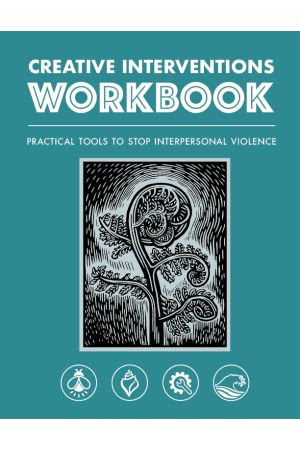
Book Review: Goliath


Image: The cover of the book shows a transparent close up of a rocky natural structure with grayscale faces of three individuals lined up vertically. They each have dark skin, dark eyes and hair, and are looking straight ahead, to the right, and up to the left. In large yellow letters cascading down the cover is the title "goliath" and moving down the side of the book in white letters is the author's name- Tochi Onyebuchi.

I can see why Tochi Onyebuchi's Goliath wasn't for everyone. It is nonlinear, "political" (I will elaborate on my use of quotes,) and is different than a lot of more well known dystopian scifi in some ways. It was, however, definitely for me. I felt immersed in the story and each character felt real to me. I listened to the audio version despite initially intending to read it in print. I've had very little time to read lately. Those who cast and produced the audio version did an excellent job. I can definitely still enjoy listening to a lower budget, single narrator audiobook and all of them certainly help me to make it through my massive to-read list. But, the multi-narrator approach to this audiobook worked really well. Each narrator, (or should I say voice actor?) performed their narration and dialogue with great skill.

As for the meandering plot and nonlinear style of this book, it performed for me more as an immersive exercise than a typical storytelling. It felt like I stepped into a near-future world and walked through it, listening to people along the way and following some of them throughout their lives. Sometimes I might feel a little lost, but I would find my way back to where I was going. I would see many things in hindsight.

As for people calling it "political" in a negative way, I do understand what they mean. But, I disagree. Honestly, everything seems political to me. Some of it is obvious because the messages step outside of a normative internalized way of being that people are indoctrinated into from birth. This, for instance, is why anything gay or non-cishet is often deemed political. This book often fits into that type of box because it involves a lot of dialogue where many people are discussing their lived experiences of oppression, environmental destruction, and collapse. However, every dystopian book with a white guy hero from a poor background who fights a powerful structure in order to rescue a woman he falls in love with is also quite political, just in a different way. I see how the use of dialogue and story telling could lead some people to feel that they were reading a manifesto, but to me it just read as people speaking their truth in conversation. And, the audio version added great elements to it, showing how each performer and director interpreted these characters. I say all of this as a person who loves manifestos as well, so perhaps my opinion isn't very helpful. But, tl;dr, everything is political.

I will end this here and encourage you to read the story for yourself.

This was also posted to my goodreads.